Into the Bush for a Cause: The Rhino Charge 2026
Every year, on the last weekend of May, a group of slightly mad Kenyans head deep into the wilderness in highly modified vehicles to drive the shortest possible distance between a set of checkpoints hidden across some of the most brutal terrain in East Africa. There is no set course. No road book. No GPS routing. Just a map, a compass, an odometer, a team, and the kind of determination that Kenya has always bred in abundance.
This is the Rhino Charge- and this year it was in the Samburu region.
What Exactly is the Rhino Charge?
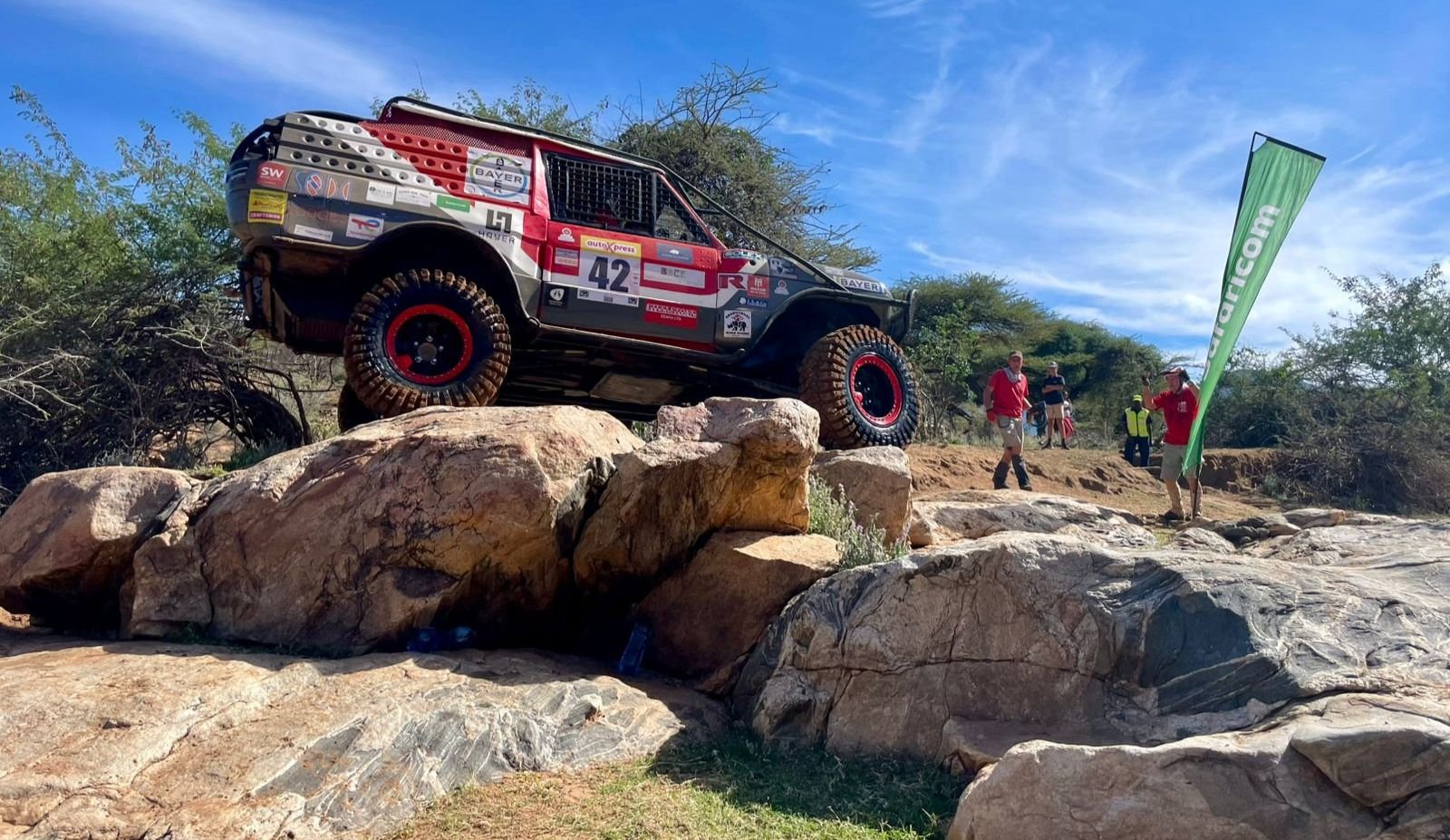
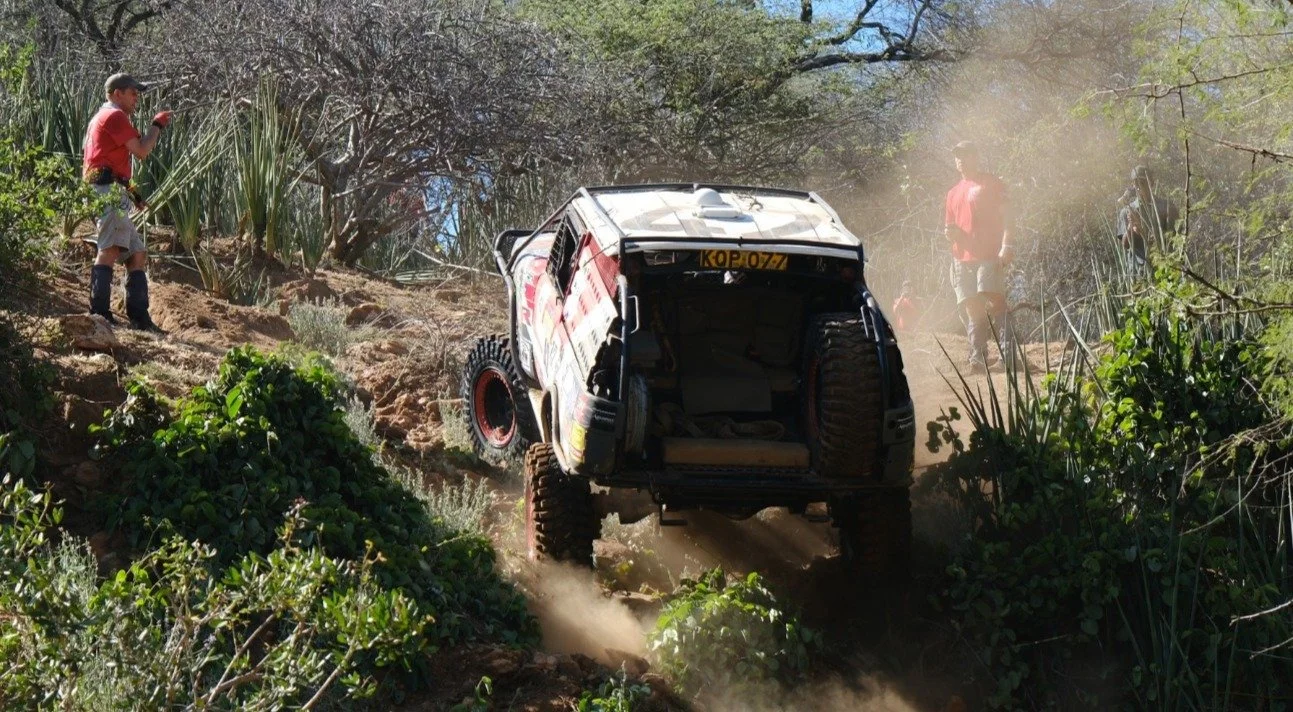
If you've never heard of the Rhino Charge, you're not alone and that's part of what makes it so special. It isn't a typical motorsport event. It isn't about speed. It doesn't take place on a circuit or a marked route. Instead, competitors are given a map with a series of 13 checkpoints, scattered across wild, remote terrain, and the single objective is to reach all of them by driving the shortest total distance. The team with the smallest odometer reading at the end wins.
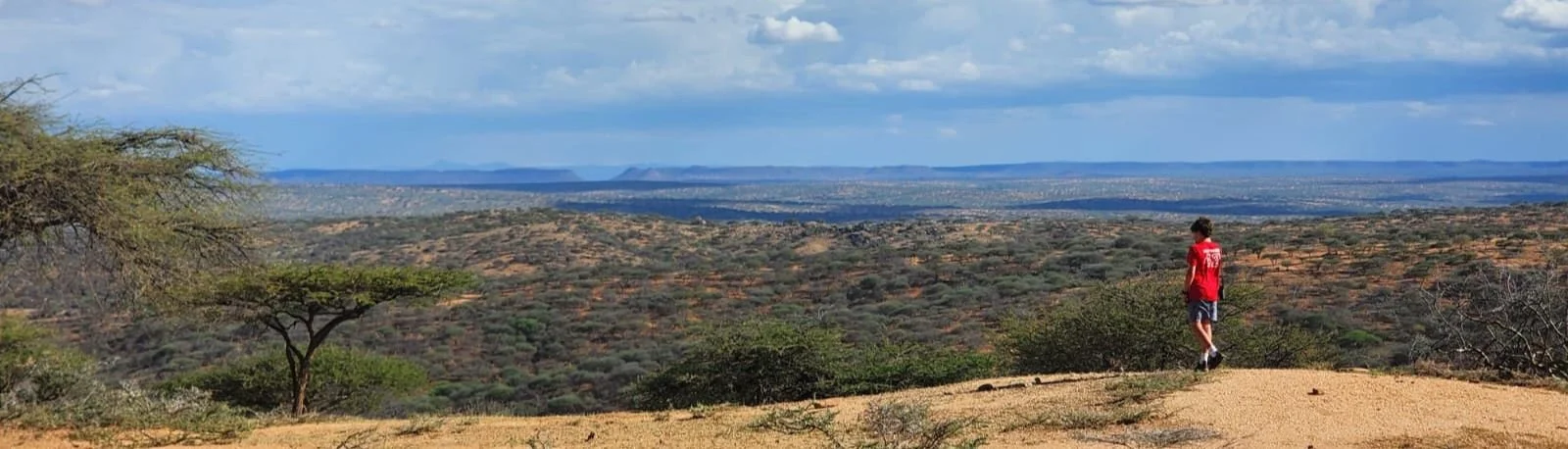
The competition takes place over a single day, typically across 30-40 square kilometres of raw, unforgiving bush. Rocks, ravines, river crossings, thick acacia scrub - the landscape doesn't care about your vehicle or your team. You navigate it as best you can, and the bush has the final say. This year's winner, Team Huzi in Car No. 33 covered just 27 kilometres to hit all 13 checkpoints. That sounds modest until you understand the terrain they covered to do it.
"The Rhino Charge is unlike anything else. It's not about going fast. It's about going smart - reading the landscape, trusting your driver & Navigator, and knowing when to turn back and find another line. The bush teaches you that every time." Mikey Carr-Hartley
But the real point of the Rhino Charge has nothing to do with winning. It never has.
Where It All Began
The Rhino Charge was born in 1989 out of a crisis. Kenya's black rhino population was collapsing under the weight of rampant poaching, and a man named Ken Kuhle had recently founded the Rhino Ark Charitable Trust to help the Kenya Wildlife Service protect what remained- starting with a critical electric fence around the Aberdare National Park, where the rhino were most concentrated and most vulnerable.
Kuhle needed money. He approached a rally enthusiast named Rob Coombes with an idea: could they organise an off-road motorsport event to raise funds? Rob brought in Brian Haworth, and the two of them spent early mornings on motorbikes, mapping routes across Mount Suswa in the Rift Valley, working out what this event might actually look like.
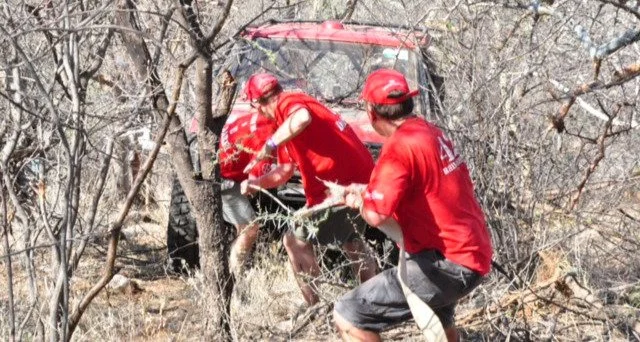
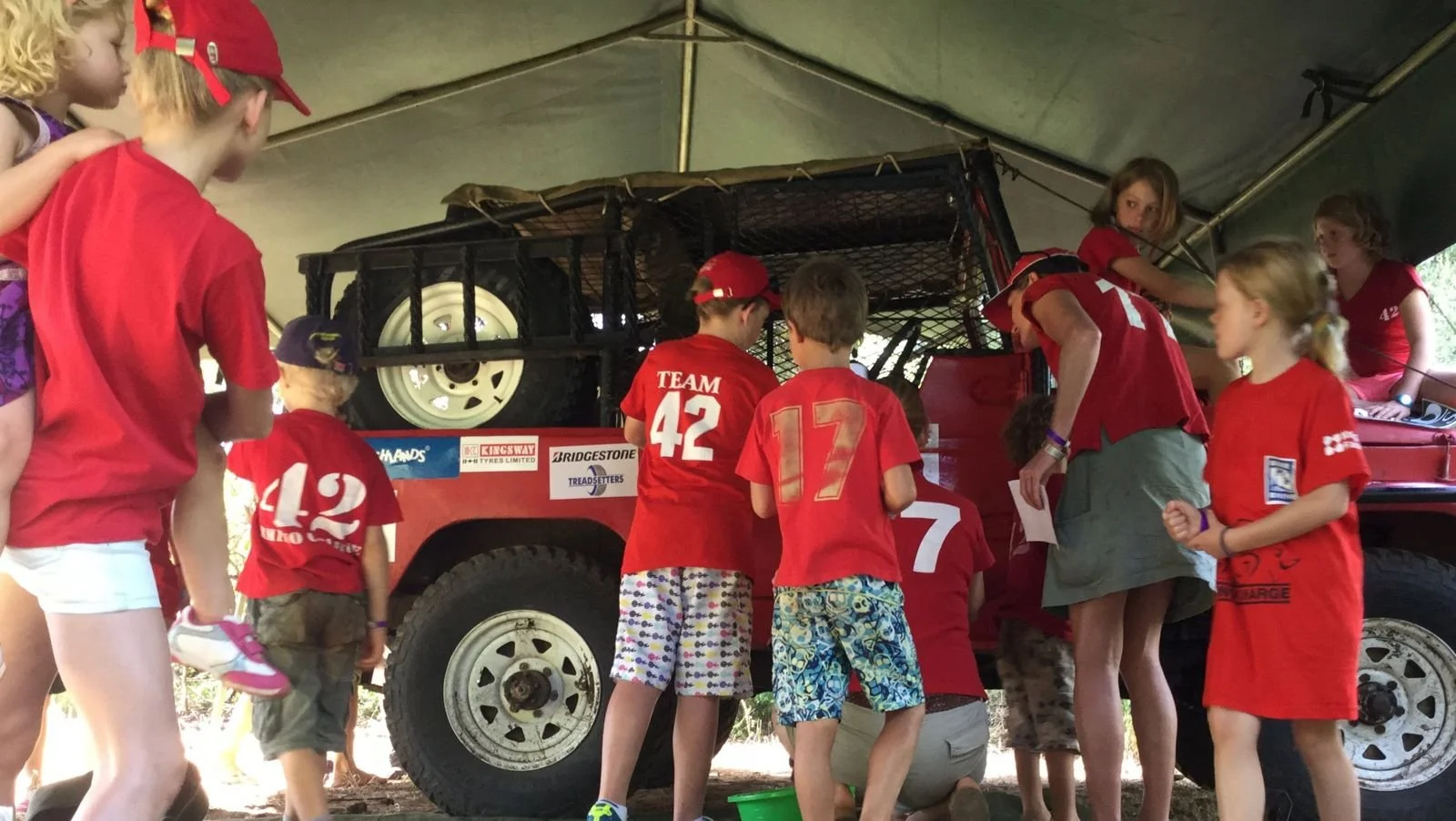
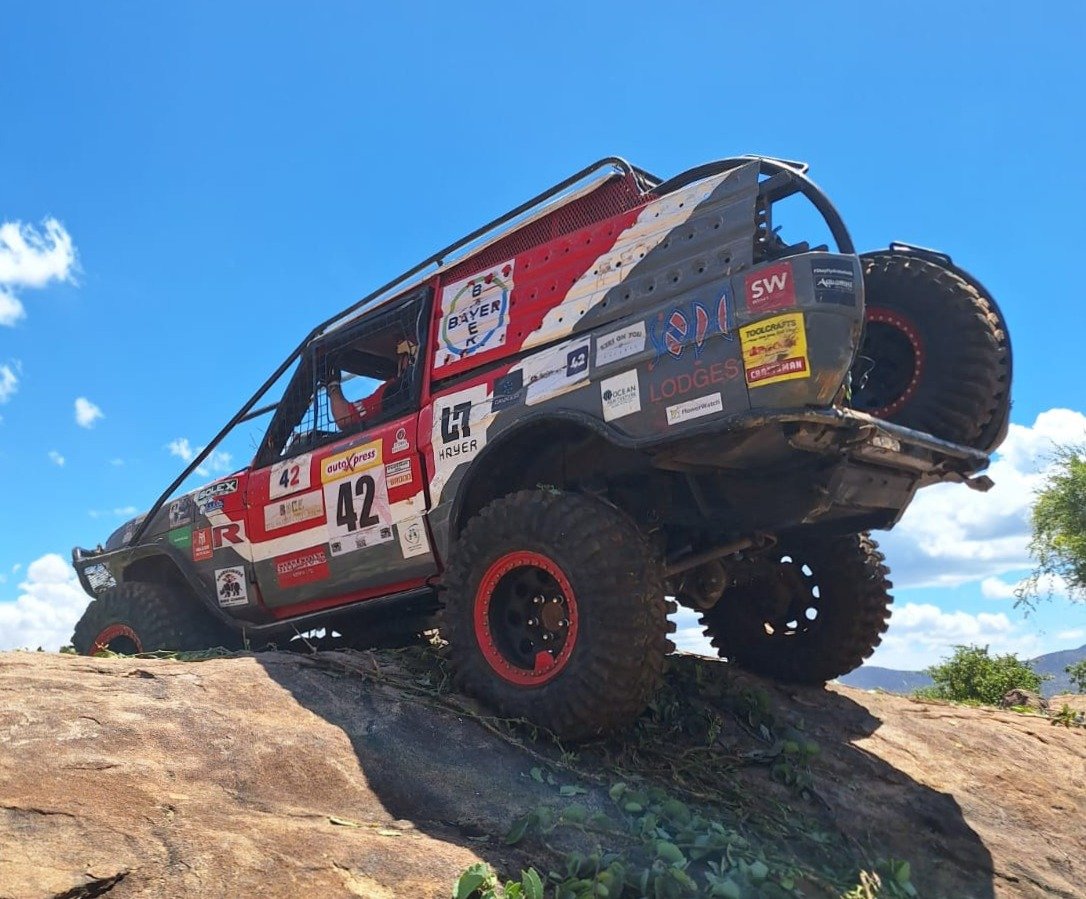
The concept they landed on was inspired in its simplicity. Not speed. Not a set course. Just checkpoints on hillsides and down escarpments, and a challenge to teams to find the most efficient line between them. On 4th February 1989, 31 vehicles entered the first ever Rhino Charge, and Team 42 members were in this charge!
What no one could have imagined that first morning in the Rift Valley is that 37 years later, this event would have raised over KES 2.7 billion for conservation in Kenya. That it would become a national institution. That garages across Nairobi would buzz for months in advance with the sound of metal being cut and welded, and that the question "where are we going this time?" would become a kind of annual ritual.
The Man Who Made Kenyans Believe in It
We have to take a moment to mention someone deeply personal to our family, and who played a defining role in transforming the Rhino Charge into one of Kenya's most powerful conservation engines.
Tanya's father, Colin Church, was born in Nairobi in 1940, a Kenyan through and through. He joined Rhino Ark in its early years and served as Chairman and CEO until 2012, bringing with him an unshakeable belief that this had to be a Kenyan story. Not foreign-funded. Not imported. Homegrown. "When the world sees Kenyans choosing to protect their own landscapes," he would say, "they listen differently."
"Rhino Ark is a totally Kenyan conservation and fundraising mechanism, an endemic effort which has developed enormous clout thanks to the Kenyan public." Colin Church
Under his leadership, the ambition expanded dramatically. He secured a landmark government commitment in 2006 a "shilling for a shilling" arrangement, the Treasury matching Rhino Ark donations with fence funding. A turning point. He also commissioned the first independent valuation of the Aberdare ecosystem, which came in at $590 million making the economic case for protection impossible to ignore. By 2009, the 400km Aberdare electric fence was complete: the longest conservation fence in Africa.
Colin passed away in 2021. He had been awarded an OBE in 2017 - an honour he described, characteristically, not as personal recognition but as a "boost to the growing belief that conservation and communities' role in it are rated as of critical importance in this world." Always pointing beyond himself.
For Tanya and I, the Charge is never just a competition, it is part of his legacy. It is something we do, in part, for him, and in part for the future of Kenya, and our childrens future.
Why We Do It: Kenya's Water Towers
The Rhino Charge started with rhinos, but its mission has grown with Kenya's conservation needs. Today, the funds raised through the event support the protection of what are known as Kenya's "water towers" the mountain ecosystems that are the lifeblood of this country.
These are the Aberdare Range, Mount Kenya, the Mau Forest Complex, Kakamega Forest, and Mount Elgon. Together they form the great rainwater catchment systems that feed Kenya's rivers, fill its reservoirs, and irrigate the agricultural land that sustains millions of people. They are home to extraordinary biodiversity - elephants, buffalo, leopard, colobus monkey, and hundreds of bird species among them. They regulate rainfall patterns that affect the entire region.
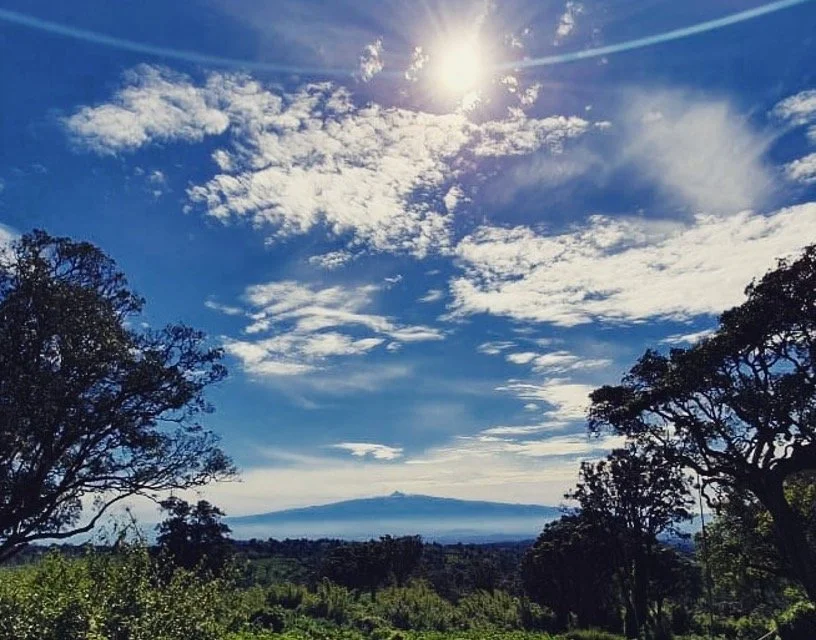
And they are under profound pressure. Deforestation, encroachment, illegal charcoal burning, and the slow creep of smallholder farming into forest margins have taken a devastating toll over decades. The electric fences that Rhino Ark builds and maintains are not just about keeping wildlife in ,they are about keeping the ecosystems intact, protecting the water sources that communities on every side of those mountains depend on, and giving the forest a fighting chance to regenerate.
"When I look at the Aberdares or Mount Kenya, I don't just see beautiful landscape. I see where the water comes from. I see why the Mara floods in the rains. I see the reason Kenya's rivers still flow. Protecting these water towers isn't an environmental nicety - it's a matter of national survival."
This is why it matters. This is why a group of volunteers give up months of their lives each year to build cars, raise funds, and drive into the bush in the early hours of a May morning.
Community at the Heart of It
Something that often gets overlooked in coverage of the Rhino Charge is the direct and immediate benefit to the communities who host it. This year's event was held at the Ngilai Community Conservancy in Samburu County, and alongside the record KES 365 million raised for conservation - the highest total in the event's 37-year history - the Rhino Ark handed over a KES 9.1 million cheque directly to the Ngilai community to support local projects.
This is a core part of how Rhino Ark operates. Conservation that ignores communities is not sustainable. The people who live on the edges of these forests are its most important guardians - and if the economic case for protection is made real to them, through schools, boreholes, clinics, and community funds, they become allies, not adversaries. That partnership is what makes the difference between a fence that holds and one that doesn't.
Rhino Charge 2026: The Numbers
The 37th edition of the Rhino Charge took place on 30th May 2026 at Ngilai Community Conservancy in Samburu, with 65 cars competing across 13 checkpoints.
Total raised: KES 365 million - a new record for the Rhino Charge, with significant support from M-PESA Foundation (KES 94 million towards fencing and protection of Mount Elgon and restoration of the Mau Forest Complex) and Safaricom. President Ruto also pledged an additional KES 200 million for conservation at the event.
Since 1989, the Rhino Charge has raised a cumulative total of over KES 2.7 billion for Kenyan conservation. That is a staggering number. That is what commitment over 37 years looks like.
Why Tanya and I Keep Coming Back
People often ask why we take part. The honest answer is that it feels like the least we can do.
We have spent our whole lives in the African bush. Our family has been here since the 1890s. We have watched these landscapes. We have seen what changes, season by season, year by year. We know what a healthy watershed looks like and we know what a degraded one looks like. The water towers that the Rhino Charge is protecting are not an abstraction to us- they are the reason the Masai Mara floods in November, the reason the Laikipia plateau is green after rain, the reason the animals we track every day have water to drink.
Tanya and I both feel strongly that those of us fortunate enough to work in this landscape, to raise our families within it, to bring guests into it, to make our livelihood from its beauty so we have a responsibility to give something back. The Rhino Charge is one very tangible, very physical way of doing that. The vehicles are brutal, the terrain is unforgiving, and the fundraising takes real effort. But crossing that finish line, knowing that every kilometre driven contributed to protecting these ecosystems, is a feeling I wouldn't trade.
Beyond the cause, there is something else. The Rhino Charge is quintessentially Kenyan. It was born here. It is run by Kenyans and long-term residents who love this country. Every year it takes place in a different wild corner of Kenya, and every year it reminds us of something we risk forgetting in the daily rush, how extraordinary this country is, and how much is worth fighting for.
"Every year the Rhino Charge takes us somewhere new, somewhere raw, somewhere that reminds us exactly why we do what we do. Kenya gives us everything. The least we can do is give something back."
Thank you for your support over the years!
You don't need to modify a vehicle or drive through a riverbed to be part of this. The Rhino Charge is a community effort, and every donation large or small goes directly to protecting the ecosystems that make Kenya, Kenya.
We know that many of you have donated over the years, and we so appreciate it. If you want to know more about Rhino Ark, or the Charge, when we are guiding you….do ask the question, there are endless stories on the event and much to share!
Mikey Carr-Hartley
Co-founder, The Specialised Safari Company